

​ Which Of The Following Animal-derived Foods Contains Significant Amounts Of Carbohydrates?
January 2017
- Chia is an increasingly popular food ingredient among consumers and manufacturers.
- The nutrient-rich seeds are good sources of α-linolenic acrid (an omega-3 fatty acid), fiber, protein, vitamins, minerals, and antioxidants, prompting claims that chia is "superfood."
- Few clinical trials of chia supplementation have been conducted, and those that have are limited past small samples sizes, short durations, and inconsistent results.
Chia, tiny seeds once known chiefly for their ability to sprout fuzzy greenish "pilus" on terracotta figurines, has now become one of the world'south hottest superfoods. Many formulators are incorporating chia seeds into a variety of foods, such as breads, granola bars, breakfast cereals, yogurt, and smoothies. Indeed, the diminutive seeds pack a mighty nutritional punch, delivering surprisingly high levels of an omega-3 fatty acid, fiber, poly peptide, vitamins, minerals, and antioxidants. And every bit a plant, chia may stand for a more sustainable source of omega-three fatty acids than seafood. However are the wellness claims made about chia supported past solid science, or is chia merely the latest in a long list of superfoods that promise benefits but fail to evangelize?
Aboriginal grain
Chia, or Salvia hispanica, is a flowering plant of the mint family unit, native to Key America. The establish produces oval-shaped seeds most 1 mm in diameter. Most chia seeds are gray with dark spots, although some are white in color (Fig. 1). Salvia hispanica, which grows best at tropical and subtropical latitudes, is now grown commercially in United mexican states, Guatemala, Bolivia, Argentina, Ecuador, Nicaragua, and Australia.
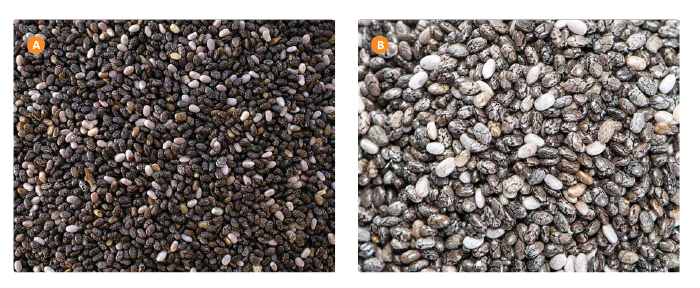
FIG. 1. A. Black and white chia (Salvia hispanica) seeds. Brown-colored seeds are likely immature. B. Magnified view of chia seeds.
Chia has been grown by native peoples in Fundamental America for centuries. The plant was an important nutrient crop for the Aztecs in pre-Columbian times (Valdivia-López, 1000.Á. and A. Tecante, http://dx.doi.org/10.1016/bs.afnr.2015.06.002, 2015). The Aztecs roasted and ground chia seeds for use in tortillas, tamales, and beverages. They also used the seeds for religious ceremonies and merchandise. During colonial times, chia consumption decreased, with the exception of a drink chosen "Agua de chia." When soaked in h2o, chia seeds absorb about 12–14 times their weight in liquid. The seed coat contains a polysaccharide that swells in contact with water, forming a gelatinous sheathing around the seed that thickens chia beverages. The US Nutrient and Drug Administration (FDA) considers chia a food, non a food additive, making it exempt from regulation. "It appears that chia has been consumed past native cultures for long periods of time, and we are not enlightened of whatever safe concerns," the FDA wrote in a 2005 alphabetic character to chia researcher Wayne Coates, then at the University of Arizona (http://tinyurl.com/chia-FDA). In 2009, chia seed was approved by the European Matrimony as a "Novel Food," allowing its incorporation into bread at upwardly to 5%.
Chia composition
The word "chia" comes from the Nahuatl (or Aztec) give-and-take "chian," meaning "oily." Chia seed yields 25–40% extractable oil (Mohd Ali, N., et al., http://dx.doi.org/10.1155/2012/171956, 2012). The U.s.a. Section of Agriculture (USDA) has reported that chia seed contains 42.12% total carbohydrates (including 34.four% total dietary fiber), xxx.74% total lipids, sixteen.54% protein, 5.viii% moisture, and 4.viii% ash (Valdivia-López, Grand.Á. and A. Tecante, http://dx.doi.org/ten.1016/bs.afnr.2015.06.002, 2015). In addition, the seed contains high amounts (335–860 mg/100 g) of calcium, phosphorus, potassium, and magnesium, with lesser amounts (4.58–16 mg/100 g) of sodium, fe, and zinc.
The predominant lipids in chia are α-linolenic acid (ALA; an omega-3 fat acid) and linoleic acid (LA; an omega-6 fatty acid), with bottom amounts of palmitic (saturated fat acid), oleic (omega-9), and stearic (saturated) acids. ALA and LA are the just two essential fat acids for humans—lipids that people must ingest in their diet because their bodies cannot synthesize them. Of the fatty acids in chia, ALA comprises virtually 60%, and LA near twenty%. ALA is a forerunner to the longer-chain omega-3 fatty acids docosahexaenoic acid (DHA) and eicosapentaenoic (EPA), which have been linked to diverse benefits, including cardiovascular and neurological health (Cassiday, Fifty., http://tinyurl.com/fish-oil-Inform, 2016).
Chia contains a higher protein content than nearly grains and cereals (Valdivia-López, One thousand. Á. and A. Tecante, http://dx.doi.org/10.1016/bs.afnr.2015.06.002, 2015). In addition, the poly peptide is more complete in terms of amino acrid content. However, chia cannot exist used as a sole source of poly peptide because the seed lacks sufficient lysine. Chia likewise contains more fiber than nearly other grains, with soluble and insoluble cobweb in a ratio of about 1:5. The antioxidants in chia, mostly polyphenolic compounds such as isoflavones, inhibit lipid peroxidation in the seeds. On a per-gram basis, chia contains more ALA, cobweb, poly peptide, and calcium than either flax seed or salmon (Fig. 2).
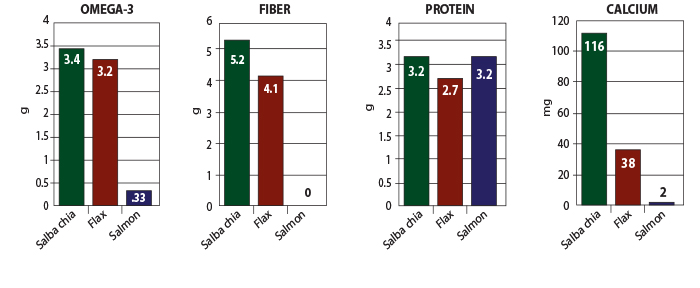
FIG. 2. Chia (Salba brand) has more omega-three fatty acids, fiber, poly peptide, and calcium than an equivalent amount of flax seed or Atlantic salmon.
The nutrient content of chia varies based on the region where information technology is grown and the growing atmospheric condition. Reported ranges of nutrient compositions include protein, xvi–24%; total lipids, 26–34%; ALA, 57–65% of lipids; and cobweb, 22–38% (Nieman, D.C., et al., http://dx.doi.org/x.1016/j.nutres.2009.05.011, 2009; Ayerza, R. and W. Coates, Poult. Sci., 2000; Ayerza, R., http://doi.org/10.5650/jos.58.347, 2009). "The nutrient content of chia will vary depending on the surface area where it was grown, the elevation, how much rain if got, when information technology got the rain, was it very hot or cooler, and the soil atmospheric condition," says Coates, now professor emeritus at the University of Arizona, in Tucson, Arizona, USA, and president of azCHIA in Sonoita, Arizona (www.azchia.com). "And that's true with any crop. There'south nothing magical near chia." According to Coates, he was one of the first researchers to study chia. In 1991, as an agricultural engineer with the University of Arizona, Coates was working on a projection in northwestern Argentina. "We were working with a grower in that location trying to find alternative crops to beans and tobacco, the two main crops," says Coates. "Nosotros planted a agglomeration of different seeds to run across what would grow at that place, and chia did pretty well. So nosotros started looking into what it might be good for." Coates and his colleagues analyzed the composition of chia, helped the Argentinian growers expand to commercial production, and examined possible health benefits of the seed.
At azCHIA, Coates sells whole and milled chia, both black and white seeds. Chia is typically a mixture of 95% black and 5% white seeds. "If you pick out the white seeds and establish them, you lot'll get white seeds. If y'all constitute only black seeds, you'll get black seeds," says Coates. "But if you analyze the food composition of black and white seeds, there'due south basically no difference." So seed color is primarily a matter of consumer preference, he says.
Chia seed maturity tin can also influence nutrient composition. For example, ALA increases 23% from the immature to the mature phase of the seed (Mohd Ali, North., et al., http://dx.doi.org/x.1155/2012/171956, 2012). "The mature seeds are white or black," says Coates. "You run into pictures of chia on the web with a lot of brown seeds in information technology. Those are immature seeds, and they don't have the same limerick." He also notes that many commercially bachelor chia sources contain weed seeds and found parts. "Everybody's jumping on the chia bandwagon," says Coates. "The trouble is that there'due south a number of people selling very poor quality chia, and the public doesn't know proficient from bad."
The question of cultivars
Through the centuries, humans accept modified chia, like all crops, by selective convenance. While most commercially available chia is a mixture of different seeds, some companies offer seeds derived from a single cultivar, which they merits boosts the nutritional value and ensures consistency. Angelo Morini, founder and CEO of Anutra, LLC (world wide web.shopanutra.com), developed the Anutra cultivar during a trip to a Mexican village called Acatic in 2002. "I found out that in that location are literally hundreds of different types of chia," says Morini. "I saw the opportunity to develop, through selective breeding, a new cultivar that maximized the omega-3, antioxidants, fiber, and protein. It didn't take us long because the people in Acatic had some real good seeds that they had been using through the years." Morini says that unlike other chia brands, Anutra has a standard of identity as a result of its consistent nutrient profile. "You'll get some people that will grow chia in the lowlands," says Morini. "They can call it chia, merely the omega-three'south very low, the protein's low, the nutrition, in general, is inferior. Just they can however sell it equally chia."
Another company, Salba Chia (Centennial, Colorado, Us), offers 2 white chia seed cultivars called Sahi Alba 911 and 912 (www.salbasmart.com). "Nigh chia y'all go at a store is grown as a wild crop, with anywhere from v to forty unlike strains," says Hank Ralston, business development manager at Salba. "With that, the nutritionals tin can fluctuate about 30% left or correct." According to Ralston, Salba's S American partners analyzed 80 different strains of chia to isolate ii cultivars with higher amounts of ALA and protein. "Our cultivars are not only consistent from a nutritional side, merely they also have consequent absorption of liquid, then that people don't take to reformulate finished products similar breads each time they get a new batch of chia," says Ralston. Salba chia comes in three major forms: whole, milled, or sprouted seeds.
But not anybody is convinced that certain chia cultivars are amend than others. "They're basically all the aforementioned thing," says Coates. "In that location's really simply one chia, and that's the one we started with. The bigger effect tin be the climate where it'southward grown."
Fish oil substitute?
Epidemiological studies and some clinical trials accept indicated a decreased take chances of cardiovascular disease and inflammation with increased consumption of EPA and DHA in the grade of oily fish or fish oil supplements (Cassiday, 50., http://tinyurl.com/fish-oil-Inform, 2016). Concerns about the sustainability and heavy metal contamination of seafood brand plant-derived omega-3'southward an attractive possibility, especially for vegetarians and those who dislike or are allergic to fish. However, fish and fish oil provide EPA and DHA direct, whereas ALA in chia must be converted by the body into these longer-chained omega-3's.
In the United states, well-nigh developed males and females already consume sufficient amounts of ALA (2.1 thousand/day and i.six g/twenty-four hour period, respectively) to satisfy adequate intake recommendations (1.6 g/day and i.1 g/day ALA, respectively) (Nieman, D.C., et al., http://dx.doi.org/10.3390/nu7053666, 2015). After absorption from the gut, ALA has iii major fates: ane) β-oxidation to produce energy in many cells and tissue types; 2) incorporation into cell membranes and storage pools, primarily in adipose tissue; and 3) conversion to longer-chain omega-3 fat acids, including EPA and DHA, mainly in the liver (Bakery, E.J., et al., http://dx.doi.org/x.1016/j.plipres.2016.07.002, 2016). β-oxidation accounts for approximately 15–35% of the ALA consumed. The conversion charge per unit of ALA to EPA, and especially DHA, is depression, with gender-related differences. Studies using radiolabeled ALA have provided estimates for conversion rates. In men, 0.three–8% and <1% of ingested ALA is converted to EPA and DHA, respectively. The conversion rates for women are significantly college: up to 21% and nine% of ingested ALA is converted to EPA and DHA, respectively.
Most studies that have examined the effects of increased ALA consumption have reported higher levels of EPA in blood lipids and blood cells, whereas most study no significant increases in DHA content (Baker, Due east.J., et al., http://dx.doi.org/x.1016/j.plipres.2016.07.002, 2016). There is a positive linear relationship between ALA consumption and the amount of EPA in plasma phospholipids: For each 1 yard increase in ALA, in that location is a ten% increment in EPA content (Fig. 3). In contrast, there is little or no change in DHA levels in plasma phospholipids with increasing ALA consumption.
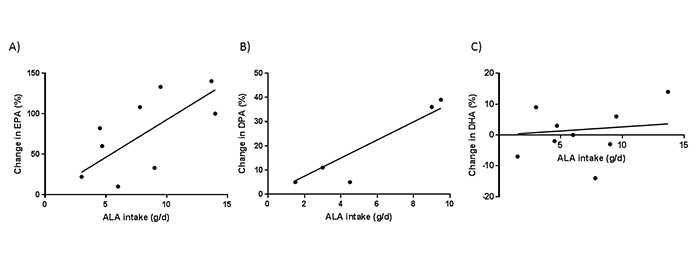
FIG. 3. Change in plasma phospholipid EPA (A) and DHA (B) every bit a result of increased ALA intake. Reprinted from Bakery, E. J., et al., (2016) "Metabolism and functional furnishings of institute-derived omega-3 fat acids in humans." Prog. Lipid Res. 64: 30¬–56, with permission from Elsevier.
"Chia could be a way of increasing the EPA content of blood and cells a little bit, but it would non be every bit effective every bit eating more oily fish or taking a fish oil supplement," says Philip Calder, professor of nutritional immunology at the University of Southampton, in the United Kingdom. "Where studies accept compared ALA with EPA plus DHA for functional furnishings, ALA is always much weaker, on a per-gram basis. As a generalization, I would say ALA is well-nigh ane-tenth as potent as EPA on a per-gram footing."
Omega-iii and omega-half dozen fat acids compete for the same enzymatic pathway to produce longer-chain fatty acids. For much of man evolution, the dietary ratio of omega-half-dozen to omega-3 fatty acids was virtually 1:1. However, mod Western diets have omega-six:omega-3 ratios ranging from 10–25:1, driving preferential elongation of omega-6s over omega-3s. Thus, the conversion of ALA to EPA and DHA might be enhanced if LA intake is decreased at the same fourth dimension that ALA consumption is increased (Baker, E.J., et al., http://dx.doi.org/10.1016/j.plipres.2016.07.002, 2016). Chia has an omega-6:omega-three ratio of approximately ane:3.
Although ALA from chia is unlikely to provide abundant amounts of EPA and DHA, it remains possible that ALA could accept its own wellness effects, contained from the longer-chain fatty acids. However, clinical studies of the effects of ALA-enriched diets on cardiovascular disease and inflammation have produced inconsistent results Bakery, E.J., et al., http://dx.doi.org/10.1016/j.plipres.2016.07.002, 2016).
Health or hype
Because chia's commercial use as a food crop is relatively recent, the seeds have not been widely studied in the clinic, and existing enquiry on chia's wellness benefits is sparse and inconclusive. Brute studies have shown promise. Feeding rats chia seed improved their serum lipid profile, lowering triglycerides and low-density lipoprotein (LDL) cholesterol while raising high-density lipoprotein (HDL) cholesterol (Ayerza, R., and West. Coates, http://dx.doi.org/10.1159/000100818, 2007).
Researchers have hypothesized that the high fiber content of chia could amend satiety and thus promote weight loss. The insoluble fiber in chia has a high h2o-holding capacity, which could be expected to induce a sense of fullness. Nieman et al. assessed the effectiveness of chia seed in promoting weight loss and altering illness hazard factors in 76 overweight or obese men and women (http://dx.doi.org/10.1016/j.nutres.2009.05.011, 2009). The study participants ingested 25 k whole chia seed or a placebo mixed in 250 mL h2o, twice a 24-hour interval, for 12 weeks. This corporeality of chia provided 19 k dietary cobweb and 8.8 thousand ALA per solar day. Other than drinking the drink, the subjects fabricated no special attempts to lose weight.
After the 12-calendar week study, the participants in the chia group had a 24.four% increase in plasma ALA levels from baseline, but no changes in plasma EPA or DHA. Also, no changes in trunk mass or composition of the participants were observed, suggesting that, in the absenteeism of other lifestyle interventions, chia does not promote weight loss. The researchers likewise did not detect any changes in disease risk factors such as systolic blood pressure, serum lipoproteins, serum glucose, C-reactive protein (CRP), or inflammatory cytokines.
In another study, Nieman et al. examined the effects of chia seed oil on human running performance (http://dx.doi.org/x.3390/nu7053666, 2015). During prolonged, intensive practise, ALA is strongly mobilized from adipose tissue, increasing near six-fold in the plasma. The researchers hypothesized that ALA may serve as a fuel source during prolonged exercise, especially after carbohydrate stores are depleted. Chia, a rich source of ALA, could enhance exercise performance and reduce postal service-do inflammation. To test this hypothesis, 24 runners who had fasted overnight were instructed to potable 500 mL flavored water, with or without 7 kcal/kg chia seed oil. This dose of chia oil provided 0.43 yard ALA per kg trunk weight, or about 31 g ALA (a large dose) for the average subject area. Xxx minutes later, the participants ran on a treadmill to burnout.
Although plasma ALA levels were elevated 337% compared to baseline in the chia group, the run time to exhaustion did non differ between the chia and h2o groups. In add-on, no differences were observed in the respiratory exchange ratio (a measure of fat acrid oxidation), plasma glucose, oxygen consumption, blood lactate, or ratings of perceived exertion between the ii groups. Cortisone and inflammatory markers increased with exercise to a similar extent in both groups. Because anti-inflammatory effects of ALA may depend on its conversion to EPA, which takes at least ane week, farther inquiry is needed to determine whether chronic ALA supplementation can reduce post-practice inflammation.
"Chia seeds are a good food source, but definitely overhyped by companies and distributors," says David Nieman, professor and managing director of the Man Operation Laboratory at Appalachian Land University, North Carolina Research Campus in Kannapolis, USA. "We have conducted several randomized trials, and have found no benefits on weight loss, disease risk factors, or athletic performance."
Still, some studies have indicated health benefits of chia. Vuksan et al. investigated the effects of supplementing conventional therapy for type 2 diabetes with chia (http://dx.doi.org/ten.2337/dc07-1144, 2007). People with type 2 diabetes have an elevated risk for cardiovascular disease, and new treatments are needed to complement existing therapies. Twenty subjects with well-controlled type 2 diabetes consumed either 37 thou/day Salba chia or wheat bran for 12 weeks.
Plasma levels of both ALA and EPA increased two-fold in the group consuming chia. The researchers constitute that the Salba chia mitigated three take chances factors for cardiovascular illness: systolic claret pressure was reduced by half-dozen.three mmHg, high-sensitivity CRP (a marker of inflammation) decreased past 40%, and von Willebrand factor (a prothrombotic glycoprotein) was reduced by 21% in the chia group. No changes in body weight, blood lipids (triglycerides, LDL cholesterol, HDL cholesterol), fasting plasma glucose, or hemoglobin A1c were observed.
In another study, Vuksan et al. assessed whether Salba chia could reduce blood saccharide spikes following meals (known every bit postprandial glycemia) in healthy subjects (http://dx.doi.org/10.1038/ejcn.2009.159, 2010). A reduction in postprandial glycemia could assistance explicate the improvement in the three cardiovascular adventure factors that the researchers had observed in their earlier written report of people with type two diabetes. Eleven healthy individuals consumed white bread containing 0, seven, 15, or 24 g of ground Salba chia. The researchers nerveless blood samples and appetite ratings two h after consumption. Post-prandial glycemia was reduced in a dose-dependent manner. On average, each gram of Salba chia baked into white bread decreased post-prandial glycemia past 2% compared with white bread defective chia. In improver, appetite ratings for all doses of chia were decreased 2 h later on consumption, suggesting an effect on satiety.
Vuksan claims that the results from his studies on Salba chia cannot exist extended to regular chia. "People make incredible profits on chia because they sell it based on our inquiry," he says. "Unlike regular chia, Salba has a very, very consistent composition. The composition of Salba that we analyzed in 2000 closely resembles that of Salba in our most contempo study, more than 10 years later." According to Vuksan's experience and others' information reported in the literature, the composition of regular chia is much more variable, he says. However, some researchers, such every bit Nieman, exercise non believe that big discrepancies in chia clinical trial results can be explained by the chia source. "All types of chia seeds are concentrated sources of ALA, soluble cobweb, and minerals," says Nieman. "There is no meaningful difference between types of chia seeds that would 'magically' make 1 seed (within the context of a normal nutrition) induce weight loss or alter affliction risk factors."
Formulating with chia
Whether or not clinical data currently support the superfood condition of chia, consumer interest in the trendy seed is unlikely to wane whatever time soon. Therefore, many formulators are incorporating chia into foods, including breads and other baked goods, snack foods, and beverages.
Chia may be an bonny pick for nutrient manufacturers who desire to brand omega-iii claims. Equally of Jan 1, 2016, the FDA prohibited food labels from claiming that products are "high in," "rich in," or "first-class sources of" EPA or DHA because no reference values for the nutrients have been established (http://tinyurl.com/FDA-omega3-claims). In dissimilarity, the FDA has taken no action against ALA claims of "high in," "practiced source of," and "more" because ALA is an essential fatty acid with a recommended intake.
From a formulator's perspective, chia has some attractive properties compared with flax seed, another plant-based source of ALA. Considering of its thinner seed coat, whole chia is easily digested past the human trunk, whereas flax seed must be ground to enable digestion and absorption of nutrients. However, flax seed lacks the antioxidants of chia, making it prone to lipid oxidation and reduced shelf life. In dissimilarity, chia is very stable. Co-ordinate to Ralston, sensory tests take indicated that whole chia seeds are stable for five years from the appointment of harvest. "When yous manufacturing plant or sprout chia, or press it to produce an oil, it'south stable for about eighteen months before y'all start to see a degradation in quality," he says.
Several methods exist to extract oil from chia seed, including compression, solvent, and supercritical fluid extraction. The latter method typically yields the highest purity and ALA content (Mohd Ali, Due north., et al., http://dx.doi.org/10.1155/2012/171956, 2012). Chia oil is not used in foods as much every bit whole or milled chia, primarily considering oil product is an inefficient procedure, with over fourscore% waste material. In addition, chia oil does non offering the fiber or protein content of whole or milled chia.
Andrew Stewart, a formulator and managing partner at Toronto-based Amazing Grains, LLC, incorporates Salba chia into all of his products. "Astonishing Grains is a alloy of sprouted whole grains with super seeds and fruits and vegetables," he says. "Information technology was the Salba chia that won united states of america the 'Startup Ingredient of the Yr' award presented past Nutraingredients.com in Geneva in May." Like Vuksan, Stewart says he will only piece of work with Salba chia considering of its consistency.
"I find that the addition of Salba chia into a multifariousness of products has the power to lower the glycemic alphabetize," Stewart says. He has also developed a fat-replacement arrangement by emulsifying whatsoever edible oil, water, and Salba chia. "I've been able to bring downwardly the fat content in a wide variety of products," says Stewart.
"Some people want to include chia in their products, but they don't really add enough to make a deviation," says Stewart. "I include Salba chia in my formulations at anywhere from 5 to xx percent. 20 percent goes into cereals." When water or milk is stirred into the cereal, the Salba gels up, creating a thick porridge-similar texture, he says.
The unique texture of hydrated chia can allow the partial replacement of eggs in baked goods. "To supplant eggs with our Salba seed, we say to utilize a iv:ane ratio of either the milled product or the whole seed to water," says Ralston. "A lot of vegans and people with other dietary restrictions are coming up with some really creative recipes using Salba."
Although the mucilaginous texture of hydrated chia seeds works well for some applications, many consumers find the mixture, which resembles tapioca pudding, unappetizing. Every bit a result, Morini adult a milling procedure that mitigates the slimy texture of chia seeds. The patented process combines mixing, milling, heating, and drying to produce extremely fine chia particles (80¬–90 microns). When mixed with water, the chai particles revert to a submicron size.
According to Morini, the microfine Anutra chia is much easier to work with than standard whole or milled chia. Because of the high content of lipids and insoluble fiber in regular chia, the ingredient tin can be difficult to solubilize in products like juices. "We developed a product that you can put in hot water, cold water, oils, dairy products, and it works beautifully. It stays in intermission," says Morini. He says that he is currently working with different nutrient companies to fortify their products with the microfine Anutra. For example, adding 1 g of the product to chocolate milk would allow a "good source of omega-three" claim, and ii g would let an "fantabulous source" claim. "They can put our product into chocolate milk, and it stays in break," says Morini. "And suddenly they don't demand to use all these thickeners like carrageenan, locust edible bean glue, or guar glue."
Supply and need
Many food manufacturers who are hesitating to take the plunge into chia are worried about potential supply bug. "Their concern is, is there going to exist enough production to sustain their product line?" says Coates. "With new crops, it's always the craven and egg thing. The producers say, "If we produce it, who'due south going to buy it?', and the big companies say, 'If we buy it, are we going to exist guaranteed a supply?'" Like all crops new to the earth market, the price of chia can fluctuate widely based on supply and demand. "Yous can never really find out who'south producing it and how much and what's in storage right now," says Coates.
According to Stewart, because Salba chia is a specific cultivar produced by a unmarried company, it is not subject to the toll fluctuations of regular chia. "Correct at present there is a shortage of regular chia, and of course, regular chia prices bounciness up and downwardly quite a chip based on supply and demand," he says. "One of the great things about Salba is that its price hasn't changed in the concluding ten years I've been working with it."
Stewart notes that some large food companies balk at incorporating chia into their products because it is more expensive than standard ingredients such as flour, sugar, and eggs. "A lot of big manufacturers are deathly afraid to pass along the price increase for healthier products to the consumer," he says. "But it's been proven that people will pay more than for healthier choices." And at least for know, chia is perceived by consumers every bit a healthier choice than virtually other whole or refined grains. Whether the nutrient-dense seed lives upwardly to the superfood hype will depend on results from larger-scale and longer-term clinical trials of chia's suspected wellness benefits.
Laura Cassiday is an associate editor of Inform at AOCS. She can exist contacted at laura.cassiday@aocs.org.
INFORMation
- Ayerza, R. (2009) "The seed's protein and oil content, fatty acid limerick, and growing cycle length of a single genotype of chia (Salvia hispanica Fifty.) as affected by environmental factors." J. Oleo Sci. 58: 347–354.
- Ayerza, R. and Due west. Coates (2000) "Dietary levels of chia: influence yolk cholesterol, lipid content and fat acid composition for two strains of hens." Poult. Sci. 79: 724–739.
- Ayerza, R. and West. Coates (2007) "Issue of dietary alpha-linolenic fatty acid derived from chia when fed every bit ground seed, whole seed and oil on lipid content and fatty acid composition of rat plasma." Ann. Nutr. Metab. 51: 27–34. http://dx.doi.org/ten.1159/000100818
- Baker, E.J., et al. (2016) "Metabolism and functional effects of plant-derived omega-3 fat acids in humans." Prog. Lipid Res. 64: xxx–56. http://dx.doi.org/10.1016/j.plipres.2016.07.002
- Cassiday, L. (2016) "Sink or swim: fish oil supplements and human health." Inform 27: 6–13. http://tinyurl.com/fish-oil-Inform
- Mohd Ali, N., et al. (2012) "The promising future of chia, Salvia hispanica L." J. Biomed. Biotechnol. 2012: 171956. http://dx.doi.org/ten.1155/2012/171956
- Nieman, D.C., et al. (2009) "Chia seed does non promote weight loss or modify disease adventure factors in overweight adults." Nutr. Res. 29: 414–418. http://dx.doi.org/10.1016/j.nutres.2009.05.011
- Nieman, D.C., et al. (2015) "No positive influence of ingesting chia seed oil on human running performance." Nutrients 7: 3666–3676. http://dx.doi.org/ten.3390/nu7053666
- Valdivia-López, Yard.Á., and A. Tecante (2015) "Chia (Salvia hispanica): a review of native Mexican seed and its nutritional and functional backdrop." Adv. Food Nutr. Res. 75: 53–75. http://dx.doi.org/ten.1016/bs.afnr.2015.06.002
- Vuksan, V., et al. (2007) "Supplementation of conventional therapy with the novel grain Salba (Salvia hispanica Fifty.) improves major and emerging cardiovascular take a chance factors in blazon two diabetes: results of a randomized controlled trial." Diabetes Care 30: 2804–2810. http://dx.doi.org/10.2337/dc07-1144
- Vuksan, V., et al. (2010) "Reduction in postprandial glucose excursion and prolongation of satiety: possible caption of the long-term effects of whole grain Salba (Salvia hispanica Fifty.)." Eur. J. Clin. Nutr. 64: 436–438. http://dx.doi.org/x.1038/ejcn.2009.159
Source: https://www.aocs.org/stay-informed/inform-magazine/featured-articles/chia-superfood-or-superfad-january-2017?SSO=True
Posted by: kraemergrance.blogspot.com
0 Response to "​ Which Of The Following Animal-derived Foods Contains Significant Amounts Of Carbohydrates?"
Post a Comment